On Writing What A Nation Will Read
In the overall journey of the development and writing of national policy, there are, generally speaking, three phases:
- Phase 1: Where those with the know-how come together to form the underlying idea behind what needs to be accomplished.
- Phase 2: Where those ideas are refined, packaged and conveyed to relevant parties in a strategy document.
- Phase 3: Where this strategy document gets transformed into tangible policy through successful (or unsuccessful) implementation.
Phase 3 is undoubtedly the most important. Today, however, I want to focus on Phase 2. Phase 2 often gets forgotten. Without Phase 2, there is no foundation for Phase 3. So, it is worth focusing on the human effort it takes to convert seemingly disjointed pieces of policy ideation into an executable strategy document.
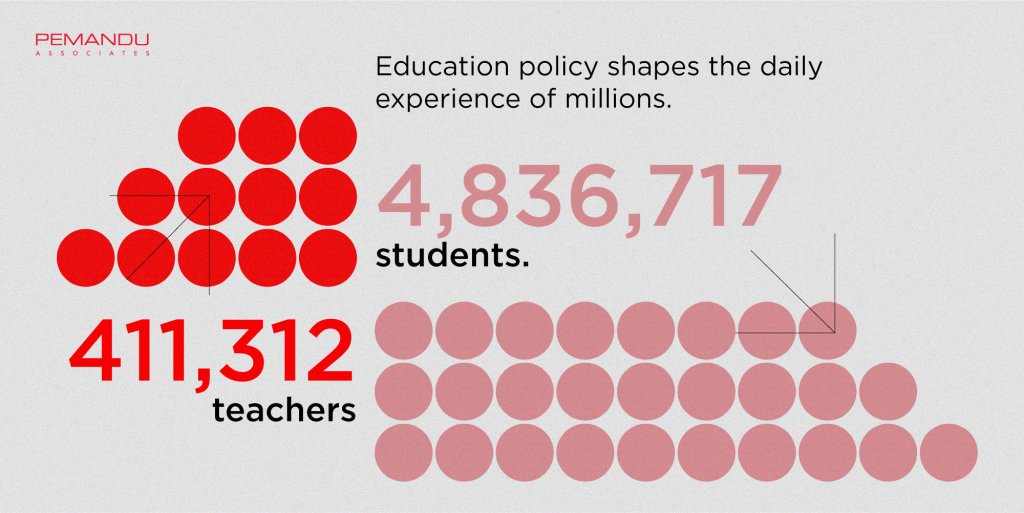
To set the stage for Phase 2, I need to start with a little bit of context from Phase 1. So as not to be a closed exercise among policy specialists, the Ministry sought guidance from education experts within and outside the system. It also reached beyond the usual circles, seeking input from industry leaders, parents, uncles, and aunties. Students from public and private schools, across primary, secondary and tertiary levels, added their voices. The intent was deliberate. The Blueprint has to reflect the system as people experience it, not only as Ministry officials design it. Education policy shapes the daily experience of millions of students, the careers of teachers across the country, and the expectations of families who see education as the primary driver of social mobility. On a macro scale, it influences workforce readiness, national cohesion, and long-term economic competitiveness. The choices made in its pages determine which skills are emphasised, which gaps are addressed, and which communities receive attention or neglect. Tens of thousands of these voices were heard and gathered through Sesi Libat Urus (SLU) sessions, labs, syndications and roadshows, alongside structured focus group discussions and consultations with dozens of agencies, education leaders and public servants. The outputs of these thus bring us to Phase 2. For us, this meant inheriting not just slides and reports, but expectations that the eventual Blueprint would feel coherent to those who had spoken into it.
You Cannot Write It Alone
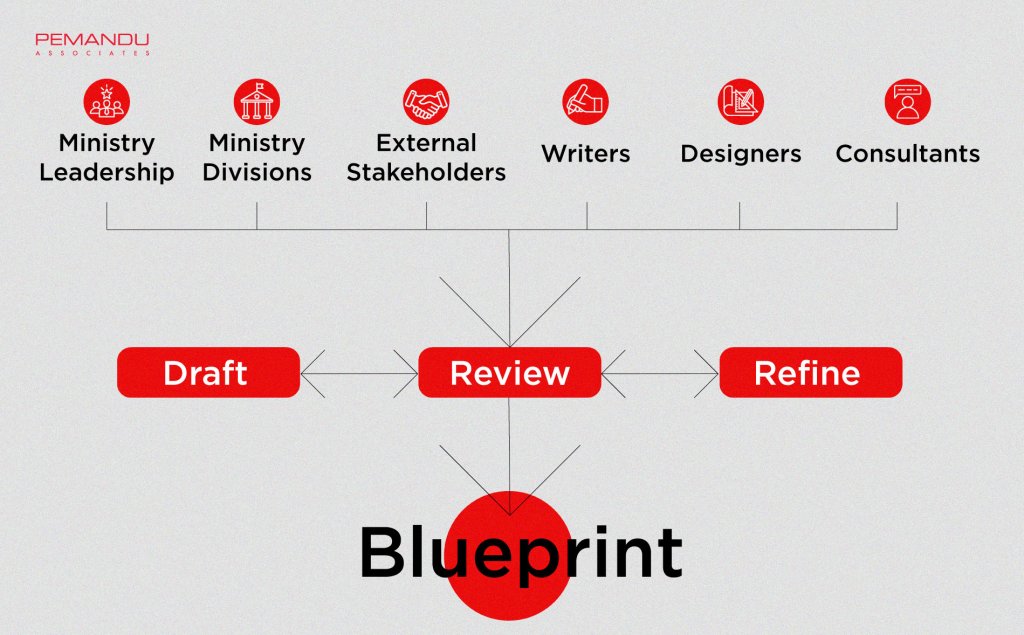
Data and word salad alone do not make a Blueprint. We are not writers. We are not designers. We’re consultants. We are facilitators, first and foremost. We know our limitations and so the first step towards a Blueprint is to bring in and manage a team who can cover these limitations. Fortunately, the right expertise was within reach.
First, our writers. A group of seasoned experts from award-winning social enterprises, leading education non-profits, and education policy experts formerly from the civil service were asked to lend a hand. The goal was to package policy such that its form became its function. If the Blueprint groups initiatives by theme, implementers align around themes. If it sequences reforms by phase, agencies plan budgets by phase. If KPIs and non-negotiable goals sit at the front, performance becomes central. Form directs attention, and attention drives action.
For our writers, this means translating technical policy into language the public can understand while preserving policy specificity and impact. This means mediating between divisions with competing priorities, ensuring that one unit’s ambition does not contradict another unit’s responsibility. This means arguments and evidence structured with precision and deliberate language, leaving no room for ambiguity, leaving no room for confusion in implementation and accountability. This also means navigating political considerations, unavoidable in a national project of this scale. The choice behind every single word matters.
Second, our designers. It would be a mistake to see their work as mere decoration. Presentation in a national policy document is never an afterthought. Every layout decision is consequential. Policy buried in dense pages risks neglect. What is placed in a highlight box signals priority. A cluttered page weakens confidence while clear visual language demonstrates authority. Hundreds of pages of drafts, rough charts, and rudimentary tables – these had to be translated into a document that reads with coherence from cover to cover.
A Minister must be able to identify the direction within seconds. A district officer must be able to understand operational detail without frustration. A member of the public must not feel excluded by technical density. Yes, the Blueprint must look pretty, but aesthetic choices go beyond ornament. The cover must deliver a thousand words in one image. The typography signals professionalism. The charts must convey clarity. The pictures must speak to the people who will be affected by the execution of the words on the page. In a document that will be debated, quoted, and scrutinised for years to come, institutional credibility is built as much through visual clarity as through content.
Coordination Is Never Just Administrative
Third, our team, the consultants. We are neither the authors of policy nor the designers responsible for visual language, but rather the keepers of time and movement. In any project – let alone one of this scale – ideas expand and multiply, stakeholders add layers, and timelines compress. Without disciplined project management, complexity morphs into blockers that stall progress. Our responsibility was to manage that complexity and keep things moving. That meant not only tracking timelines and deliverables, but ensuring that discussions converged toward action. In rooms filled with strong and well-founded views, someone has to call for resolution, to ensure that direction is agreed, progress does not stall, and that not a single minute is wasted. We set cadence for regular and timely submissions and ensured decisions were made. We managed scope, preventing suggestions from expanding into unmanageable derailments. We aligned expectations between writers, designers, and clients, escalating when necessary. Momentum is fragile and once lost, it is hard to recover. In large national projects, coordination therefore goes beyond administration. It is the difference between movement and stagnation.
Writers shaped meaning. Designers shaped form. And the consultants ensured the entire effort moved forward as one coherent whole.
A month after kickoff, we had in our hands extremely preliminary rough drafts of the core content chapters. A decision was made to hold a week-long writers’ workshop away from the usual pace of the city, meant to hold us, our writers, and their Ministry counterparts in one place, dedicated to churning out refined material while also setting time to subject the material to wider feedback. Removed from daily routines, it was expected that we would work from dusk till dawn. In a tower atop the hills, surrounded by rain and fog, one of our writers remarked on the pathetic fallacy of it all. Low visibility, an unclear path, and a steep climb ahead. The chapters we had were substantial but uneven, with some sections rich in argument but thin on evidence, while others were technically sound but inaccessible to a broader audience – clearly shaped by different hands and not yet speaking in one voice. Time did not allow for leisurely refinement. We had to circulate refined drafts to eminent voices across the system. Former senior civil servants, education leaders, non-profit figures – each carried views that added clarity, sharpened arguments, but also questioned fundamental framing. Some suggested scope expansion at the precise moment we were trying to contain it. Every endorsement was heartening, while every objection required addressing. This workshop went beyond writing. It was a sequence of snowballing decisions. What do we stand by? What do we cut? How do we manage all these tensions to produce one coherent draft? Clarity came as the week progressed. We left with better drafts, more chapters, and integrated expert feedback. The first full draft was in hand, and we had begun shipping them off for design. That week set the tone for the remaining months ahead. Alignment must be built, not assumed, decision by decision.
No Thing Too Small
If that week was about ensuring the broad strokes were sound, the next couple months were about precision. The drafts we sent to the designers returned as designed chapters awaiting review. Arguments about direction became arguments about diction. The client reviewed these, and comments returned line by line, even word by word. Often, we went to the Ministry and parsed these lines together, questioning, redlining, and replacing words and phrases. Certain terms were deemed too technical for public comprehension, while others were seen as too casual where increased specificity would be welcome. Sentences that seemed settled reopened under fresh interpretation. Paragraphs were tightened, expanded, reordered. References were checked and rechecked. Definitions were aligned across chapters to prevent contradictions. Initiative titles were changed then changed again. The work was incremental but relentless – version numbers climbed steadily, and a single chapter could go through multiple iterations in a week. Debates were convened on whether one word conveyed intent more accurately than another. Minor revisions carried larger implications for tone, authority, and implementation ownership. An adjustment of a word in a paragraph in a section of a chapter often necessitated a consistent reflection across headings, diagrams, charts, the table of contents, the glossary. Nothing existed in isolation, and a small shift in one place required ripple edits somewhere else. This stage carried with it no singular crisis, but rather an accumulation. An accumulation of edits. Of clarifications. Of expectations. There was not a single day we didn’t wake up to a flurry of messages from the clients, writers, or designers. The discipline required here was different from the early sprint in the week-long workshop. It demanded patience, it demanded endurance. The Blueprint had to be read as if it had emerged fully formed, in one coherent voice, even though it had been stretched and tested through countless rounds of scrutiny. Precision was non-negotiable.
When Authority Enters the Room
With the launch ceremony imminent, there was not much time left, with numerous attritional changes still to be made. Nevertheless, we were one with the client in pushing through these final few days. It simply had to be done. We were almost at the finish line, and while no one wanted to say it, we were waiting for the other shoe to drop. At this stage, what could go wrong?
The other shoe dropped. A decision had been made to make systematic changes to key terms across the entire document. A political decision, but a necessary one nevertheless. Words that had been debated, defended, and aligned over months had to be replaced with alternatives. These substitutions were not isolated. They appeared in body text, in the table of contents, in diagrams, in the appendix. The consultants spent those days marking these changes on the latest PDF version. The writers and their Ministry counterparts did the same while also making the accompanying changes in sentence structure, ensuring the appropriate prefixes and suffixes were used, and that context was preserved. The designers had to apply these changes in their InDesign file, reflowing layouts where longer words altered spacing. The launch date did not move. What could have unsettled the entire process instead forced clarity of roles. All involved did their part with renewed focus, without complaint, making sure nothing slipped through. This episode reinforced a simple truth – in national policy work, political judgment is inseparable from technical design. The strength of a team lies in its ability to respond with composure when that judgment asserts itself, and that clarity of roles matters most when complexity peaks. When everyone understands their responsibility, even compressed timelines are navigable. Those final days were not elegant, but we had the Blueprint finalised for the launch in good time. A few hardcover copies, to be displayed at the ceremony, were to be printed. We were now ready to launch.
At Some Point It Leaves You
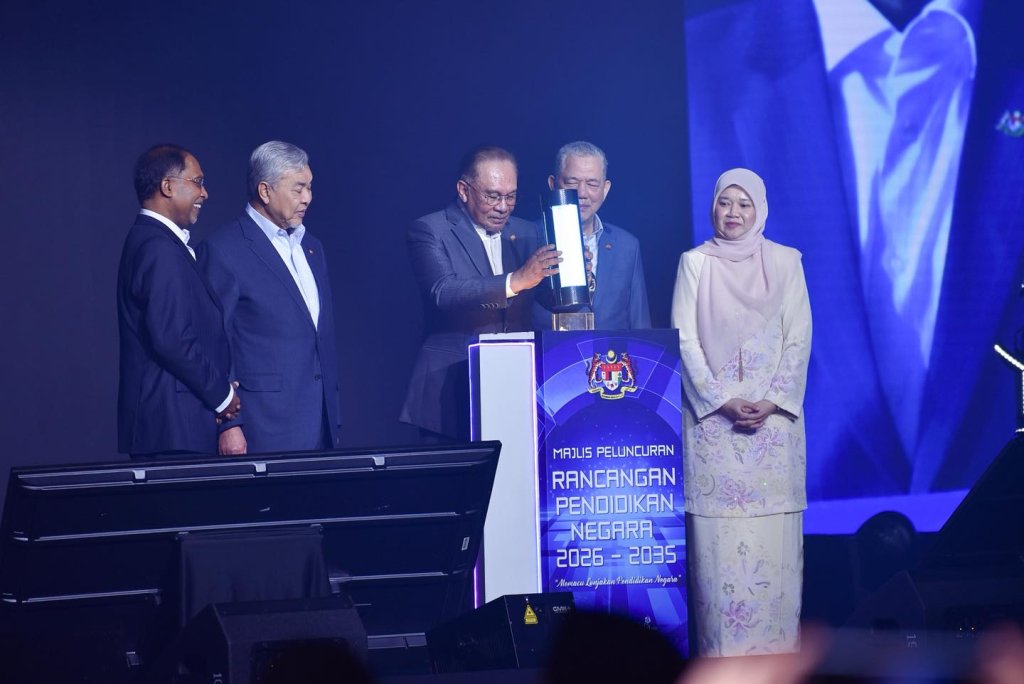
Tuesday, 20th January 2026. Finally, the Blueprint was to be unveiled to the nation. The Prime Minister gave his speech to a room of over a thousand, surrounded by ministers, senior officials, education leaders, teachers and students. As with many of these official launch events, there is a gimmick involved – in this launch, for example, there was a person dressed as a robot who ran towards the stage holding a glowing cylinder. This cylinder was passed to the Prime Minister, who placed it into a receptacle on his rostrum, and on the big screen appeared the cover of the Blueprint. Standing on stage alongside him were the Deputy Prime Ministers, the Minister of Education, and the Minister of Higher Education. Printed hardcovers of the Blueprint were distributed between them. I have never been fond of these gimmicks. But as I watched the cover flash across the screen, and the hardcovers being flipped through on stage, knowing the pages we had debated and revised and worked on for what seems like an endless period of time were now tangible, I felt simultaneously a sense of pride and relief. I know my team felt the same. At this moment, the document ceased to be a draft. It had become a national commitment.
With the launch, Phase 2 came to an end. In the weeks that followed, many voices spoke and opined on the Blueprint. Friends and family sent messages, podcasts and radio shows debated its merits. Some views I agreed with. Others I did not. What was unmistakable, however, was that people across this nation care deeply about education and its beneficiaries. As I wrote at the beginning of this essay, the true test of the Blueprint lies in its implementation, and this responsibility now rests in the hands of those who will carry it into classrooms, departments, and budgets. The Blueprint is written. The real work begins.
Written by:

Aaron Lugun Raj, Senior Associate
———-
Let’s transform together. Contact us at: https://pemandu.org/contact-us/